Author: saad.5690@gmail.com

  • AI Marketing: What It Is, How It Works, Benefits & Ethical Guidelines

    AI Marketing: What It Is, How It Works, Benefits & Ethical Guidelines

    AI marketing uses artificial intelligence tools to make automated judgments based on data collecting, analysis, and further observations of audience or economic patterns that may influence marketing efforts. AI is frequently employed in digital marketing initiatives where speed is critical. AI marketing technologies employ data and customer profiles to learn how to engage with clients effectively and then give them targeted messages at the perfect moment without marketing team intervention, resulting in maximum efficiency. Many of today’s digital marketers employ generative AI to supplement marketing teams or execute more tactical activities that require less human delicacy.

    HOW AI CAN HELP MARKETERS:

    These are a few examples of how marketers can use AI.

    • Personalized recommendations are one of the best ways that help companies connect with customers. Through AI, companies track down customers’ personal favorites or interests and deliver them accordingly. 
    • AI marketing is about giving clients exactly what they want when they want it. Predictive analytics makes this possible. These prediction models process massive amounts of data on each lead. Identify patterns. Then, identify the optimal moment to target each individual.
    • Enter chatbots and AI marvels that provide quick responses, engage users, and even provide personalized recommendations. It’s like having a virtual assistant who is always there and never takes a break.
    • Forget the hit-or-miss method. AI content optimization has altered the scenario. AI optimizes your content for laser-focused targeting. It examines user behavior, preferences, and trends to adapt your content strategy, ensuring that each piece speaks directly to your target audience’s hearts (and wallets).

    There are certain ways of applying and using new technology, developers or marketers use few guidelines. These guidelines help companies and customers achieve their goals, keep their privacy, and maintain a healthy relationship with each other.

    GENERAL AI MARKETING GUIDELINES:

    1. PURPOSE OF USING AI IN MARKETING:

    The most common question regarding AI is, “What can I use it for?” 

    • Customer Segmentation and Targeting: Personalization
    • Chatbots & Virtual Assistants
    • Predictive Analytics, Marketing Research, and Content Creation (e.g., brainstorming, outlining, writing, research)
    • SEO Design Email Marketing Automation
    • Social Media Management
    • Ad Targeting and Optimization
    • Customer Relationship Management (CRM).
    • A/B Testing and Optimization.
    • Fraud Detection and Security, etc. 

    Although AI can perform many things, it is critical to discuss its genuine purpose within your firm. This vision may vary as new technologies become available, but in general, you should explicitly define how and for what purpose you are using AI. 

    1. DETERMINE EACH USE:

    Determine what recommended practices users should follow for each use case. You should also explicitly specify what the AI can and cannot accomplish in the context in which you use it. (This establishes realistic expectations for users while preventing misuse or overreliance on AI.)

    For example, you may provide specific recommendations or AI prompts to help with each use case, such as content brainstorming and optimization, model training, and data analytics.

    1. ETHICAL CONCERNS:

    Depending on the usage, sector, or audience, AI can raise valid ethical considerations that you may not have considered. 

    For example, if you use AI to synthesize a client’s brief, is their confidential information at risk? How can you ensure that AI-generated content is not plagiarized? Identify any potential issues for each use case. Some things to consider.

    • Transparency: Do you have to disclose that you are utilizing AI for specific purposes? How will your audience react? Are there any possible issues?
    • Fairness: How can you reduce bias in AI systems? How can you check for bias? 
    • Privacy: How will you ensure AI systems follow applicable privacy laws and regulations? You may need to adopt privacy-enhancing technologies to protect.
    • Accountability: Make sure that why and how the company is using AI, the company should have a fixed set of rules and regulations.   
    1. SET A USEFUL EXAMPLE:

    When developing guidelines, it is critical to include real-world examples that graphically demonstrate how users can efficiently use the tools at their disposal. This approach not only clarifies usage but also encourages people by demonstrating the practical application of these tools in their daily lives.

    1. FEEDBACK:

    Even if your team has been at the forefront of AI since it came on the scene, you still need to sanity-check your guidelines to make sure they’re comprehensive and make sense to others. (If you have employees who are particularly nervous or intimidated by AI, the guidelines should not only help them understand but also feel empowered to use it effectively.) 

    Seek feedback from the appropriate parties, particularly on the moral ramifications or problems you might encounter.
  • What Is AI Marketing?

    What Is AI Marketing?

    AI marketing uses artificial intelligence tools to make automated judgments based on data collection, analysis, and further observations of audience or economic patterns that may influence marketing efforts. AI is frequently employed in digital marketing initiatives where speed is critical. AI marketing technologies employ data and customer profiles to learn how to engage with clients effectively and then give targeted messages at the perfect moment without marketing team intervention, resulting in maximum efficiency. Many of today’s digital marketers employ generative AI to supplement marketing teams or execute more tactical activities that require less human delicacy.

    HOW AI CAN HELP IN MARKETING:

    AI applications in marketing are used by businesses to enhance engagement, increase conversion rates, and drive profit growth. Below are a few options where AI could help. 

    • Content Marketing: AI can generate personalized blogs and viral articles with a few clicks using business data and previous experiences. AI chatbots can provide 24-hour customer assistance by recognizing context and user intent using natural language processing (NLP).
    • Personalization: Algorithms can analyze consumer behaviors and preferences to provide product recommendations and provide seamless, specific experiences, resulting in enhanced connection.
    • Predictive Analytics: An AI technology can estimate market and customer trends by analyzing large amounts of previous data. It can forecast demand, identify high-value customers, and detect supply chain concerns.
    • AI Social Media Marketing: AI models can evaluate social media data to find the best time to post. They can then track engagement to identify the most effective content kinds, all without human interaction.
    • Search engine optimization (SEO): Marketers can use AI to provide keyword ideas and automatically optimize web pages to improve the company’s search engine ranking.
    • Demographics: Analyzing demographics and user behavior allows AI to optimize ad placements and timing. Marketers can also use AI to bid for ad space in real time. Analyzing demographics and user behavior allows AI to optimize ad placements and timing. Marketers can also use AI to bid for ad space in real time.
    • Sentiment Analysis: AI systems may use reviews, comments, and feedback on a product or service to determine sentiment. For example, social media listening allows AI systems to investigate clients’ opinions on social media platforms.

    ADVANTAGES OF AI IN MARKETING:

    Makes Things Clearer:

    Have you ever wondered why companies do not advertise? A recent survey found that 71% of marketers believe businesses don’t truly understand their customers. Because of this, 66% of marketers think companies should spend more on improving customer awareness and engagement. AI voice assistants, technology, and IoT help you set reminders and notifications and get clear answers when you need them.

    Leverages IoT:

    AI is also revolutionizing digital marketing by utilizing the potential of connected devices and the Internet of Things. It’s a significant improvement from the past when all you needed was your phone, and it worked from anywhere. You can now see who is asking for your feedback without having to log into your company’s email account.

    Turns to Autonomous Marketing:

    Despite its divisive nature, artificial intelligence (AI) is always evolving and improving. It will not only become smarter but will also take on the role of people. Your artificial intelligence (AI) assistant, like Apple’s Siri or Amazon Echo, will make a pitch for you and your business.

    You can do more with your smartphone than just talk to it and read voice-activated texts. Your AI will be able to function more independently as time passes. Your device will make the necessary recommendations and even manage your funds while you make purchases or book tickets.

    Identify Your Voice:

    Here’s another reason why AI is transforming the digital marketing scene. People can now be found and connected with online much more easily. Even if you do not try to learn how to use it, businesses like Apple, Facebook, Amazon, Google, and others will recognize your voice.

    Casual Communication:

    The gadget may have recognized your voice and answered a year ago when voice assistants were still in their early stages, but it could not have provided you with a bespoke response.

    As a result, businesses may predict your behavior based on previous searches, website time, geography, and other data. When you specify your chosen brand, the device will look for it more successfully in the marketplace. AI-powered chatbots offer numerous benefits for digital marketing. Chatbots are computer programs that can interact with humans via text or voice commands. 

    Consider AI a vehicle capable of delivering all the necessary and desired customer insights. You can market more effectively and develop tailored content that customers enjoy. The truck is driving quickly, but don’t panic. I’m here to teach you how to be a confident driver.

  • Benefits of Artificial Intelligence

    Benefits of Artificial Intelligence

    BENEFITS OF AI:

    A machine could not produce ice cream or fly over the Pacific until recently. These are now commonplace elements of everyday life thanks to advances in computer science and mechanical engineering that enable robots to do activities formerly performed by people.

    Emerging technologies have pushed machine capabilities even further. Artificial intelligence (AI) is a field of study that has produced computer software that mimics human cognitive processes. Machine learning enables AI systems to do prose writing, musical creation, data analysis, computer programming, and medical diagnosis. In many circumstances, they can complete such jobs rapidly and without human interaction.

    Artificial intelligence presents multiple advantages across numerous sectors, and its benefits are expected to increase over time, significantly enhancing its value to humanity.

    1. Automation
    2. Human errors
    3. increase in business
    4. Enhancing Healthcare
    5. Better customer experience
    6. New Research
    7. Smart decision

    .

    1. AUTOMATION:

    Reducing the time and effort required to finish a task is the most astounding advantage of AI. Individuals used paperwork to enter data prior to the 2000s, which took a lot of time and human labor.

    These days, a lot of businesses are using software robots to carry out these tasks automatically to boost productivity and efficiency and stay competitive. One of AI’s most well-known advantages is automation, which is applied extensively in a variety of industries, including manufacturing and transportation.

    Automation is simply the process by which a machine performs basic, repeatable tasks in response to human-provided instructions. Automation is less labor-intensive than its traditional equivalent, even if it still requires some human input.

    1. HUMAN ERRORS:

    The decrease in the possibility of human error is a major benefit of automating routine commercial processes with AI solutions. Data entry and processing are handled by robotic process automation (RPA) tools, which improve digital systems’ efficiency and reduce the possibility of errors during data processing. For companies that can’t afford even the slightest errors, this is helpful.

    AI, for instance, can evaluate medical information and help physicians diagnose patients. Furthermore, AI is used by self-driving cars to make decisions. AI software will remain essential to our daily lives as long as it is thought to be less error-prone than human labor.

    1. INCREASED IN BUSINESS:

    An increase in business means that AI helps companies 24/7 with reliability. Because AI is a system that is trained to perform daily tasks without getting bored or tired, with productive results each day. When AI is doing data-related jobs, the employees can concentrate on more complex jobs in which human assistance is required. 

    Data gathering and analysis, inventory management, customer service, and data entry are routine tasks for the majority of businesses. AI saves time and effort and can do it flawlessly. By automating these duties, businesses can eliminate time-consuming processes and redirect resources to more valuable endeavors. 

    1. ENHANCING HEALTHCARE:

    There are numerous ways in which AI-based solutions could be extremely beneficial in the healthcare industry.

    It is used for administrative tasks like data entry and test analysis, as well as much more complicated procedures. AI-powered robots may even do surgery in the future, minimizing human error and even saving lives. For example, remote patient monitoring technology enables medical professionals to make clinical diagnoses and recommend treatments promptly without the patient having to physically visit the hospital. AI can also be used to monitor the progression of infectious diseases and even predict their future effects.

    1. BETTER CUSTOMER EXPERIENCE:

    From long wait times to unsolved tickets, poor customer service is a prevalent complaint worldwide, producing continuous annoyance, inefficiency, and strain.

    However, when customer support personnel are inundated with emails and phone calls, it’s difficult to criticize them for providing bad service.

    There are numerous ways that AI has improved customer service in recent years, particularly with the development of smart chatbots. These are proactive, not reactive (like conventional bots), and can accept user inputs and algorithmically find solutions without much human intervention. 

    1. NEW RESEARCH:

    AI and machine learning technology can significantly improve data analysis efficiency. It can help to develop predictive models and algorithms for data processing and understanding the potential outcomes of various trends and events. Furthermore, AI’s sophisticated computing skills can accelerate the processing and analysis of data for research and development that would otherwise take too long for humans to analyze and understand.

    As a result, significant inferences are drawn, trends are identified, and scientists are equipped with the information they require to produce breakthroughs and discoveries.

    1. SMART DECISION:

    There’s a reason why organizations are putting more emphasis on emotional intelligence than ever before: it reduces bias and subjectivity in decision-making. 

    Artificial intelligence can analyze patterns, build data consistency, provide forecasts, and detect anomalies, allowing it to make wiser, more unbiased data-driven judgments. It’s no surprise that 86% of executives are currently adopting AI in their firms.

    AI helps in two ways. The first step is to remove these automated tasks so they can find qualified prospects with more time and space. The second benefit comes from the choosing process itself.

    AI can assess CV scores in seconds without prejudice, resulting in a more robust selection process, which may lead to higher matching accuracy and longer employee retention.

  • Artificial Intelligence

    Artificial Intelligence

    Artificial intelligence (AI) refers to the exploration of intelligent behavior exhibited by humans, animals, and computers, in addition to the discovery and development of AI technologies. It represents one of the most challenging yet profoundly intriguing endeavors ever undertaken by humanity. AI is not merely a system; rather, it is an application that can be integrated into various systems.

    AI is a vast field of study, and with time, it will grow more. That is why it is hard to classify it. But AI is divided into two types; both types have their strengths and weaknesses. 

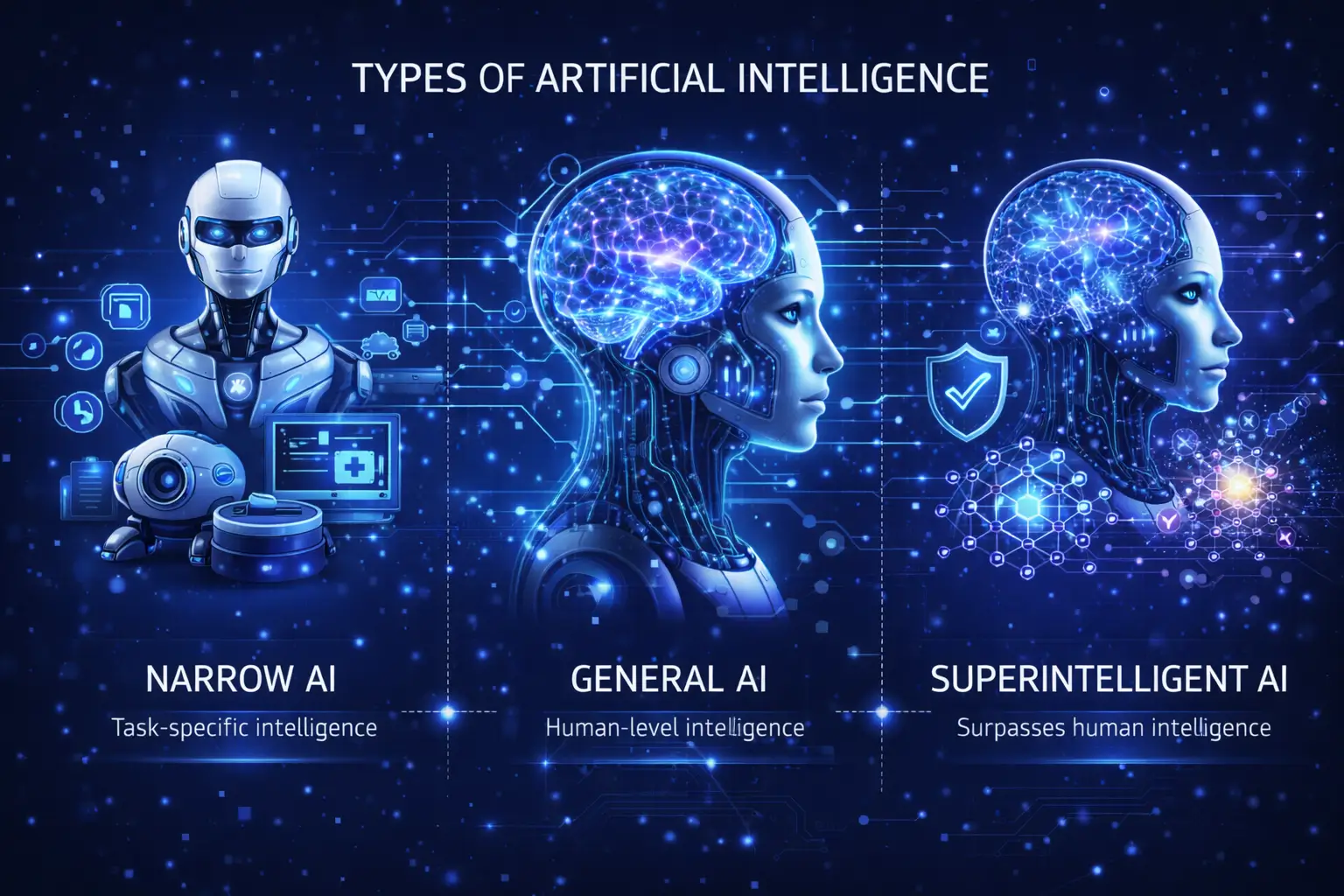
    TYPES OF AI:

    AI is divided into two types: the first is based on its capabilities, and the second is based on functionalities.  

    AI-based capabilities are narrowed down into three sub-fields.

    • Narrow AI (Weak AI)
    • Artificial General AI (Strong AI)
    • Superintelligent AI (Super AI)

    AI-based functionalities are narrowed down into four sub-fields.

    • Reactive Machine
    • Limited Memory in AI
    • Theory of Mind
    • Self-Awareness AI

    NARROW AI:

    Narrow AI cannot function outside its field or constraints since it is only programmed for a single purpose. As a result, it is often referred to as weak AI. When narrow AI is pushed past its bounds, it might fail in unexpected ways. But it is the commonest AI that is used today. 

    Apple Siri is a wonderful example of Narrow AI; however, it has a limited set of predefined capabilities. In narrow AI, we can also include the face and voice recognition feature, online shopping on websites, and self-driving. 

    ARTIFICIAL GENERAL INTELLIGENCE:

    Artificial general intelligence (AGI), often referred to as strong AI, is currently a theoretical concept. AGI has the potential to apply existing knowledge and skills to tackle new tasks in different environments, thereby eliminating the need for humans to instruct the underlying models. This capability would enable AGI to perform any cognitive activity that a human can.

    While AGI remains a concept at this stage, developers believe that technologies such as ChatGPT, supercomputers, and quantum hardware could serve as important initial steps toward achieving AGI.

    SUPERINTELLIGENT AI:

    Artificial superintelligence (ASI), sometimes known as super AI, is a true imaginative concept. It is hypothesized that if AI reaches the level of general intelligence, it will learn at such a rapid pace that its knowledge and skills will surpass those of even humans.

    ASI will be the main technology for creating fully self-aware AI and other robots that work on their own. Important features of a strong AI include the ability to think, reason, solve problems, make decisions, plan, learn, and communicate independently.

    SuperAI remains a speculative topic in the field of artificial intelligence. The development of such systems in the actual world remains a world-changing challenge.

    REACTIVE MACHINES:

    Reactive machines are those kinds of AI systems that depend on the current input or data. Reactive machines have no prior knowledge or memory to do certain tasks. These systems work on the data that is accessible to them at the given moment. Reactive AI is based on statistical information and can evaluate large volumes of data to provide surprisingly intelligent results.

    IBM’s Deep Blue system and Google’s AlphaGo are other examples of a reactive machine.

    LIMITED MEMORY IN AI:

    Limited Memory AI is different from reactive machine AI because it can remember past events and track specific objects or situations over time. It uses information from the past and present to choose the best actions to achieve a goal.

    However, limited memory AI can only remember data for a short time and does not keep a long-term record of past experiences. It can improve its performance by learning from new data.

    Virtual assistants like Siri, Alexa, and ChatGPT are all examples of limited memory.

    THEORY OF MIND:

    This kind of AI came under the classification of general AI. The main function of the theory of mind AI would be to understand thoughts and emotions like humans. This system will make AI equal to human minds, and they can establish a human-like relationship. Because Theory of Mind AI can determine human motives and reasoning, it will tailor its interactions with humans to their own emotional needs and goals. Theory of Mind AI would also be capable of understanding and interpreting artwork and writings, something that current generative AI technologies cannot achieve. 

    But again, AI still needs to develop with this kind of perfection so that it can imitate human minds. 

    SELF-AWARENESS IN AI:

    Self-aware AI is a type of advanced AI that we can only imagine for now. If it were to exist, it would understand its thoughts and feelings, as well as human emotions and ideas. It would have its own emotions, desires, and beliefs.

    Emotion AI is a developing form of this advanced AI. Developers hope it will analyze speech, images, and other data to recognize and respond to human emotions. Currently, emotional AI cannot understand or respond to human feelings.

  • How Does AI Work?

    How Does AI Work?

    AI is a new technology that aims to imitate human intellect. It enables computers to mimic how the human brain thinks, learns, and makes decisions.

    AI works by mixing large amounts of data, human oversight, and mathematical probability. Creating practical AI systems requires a multistep AI design and training approach.

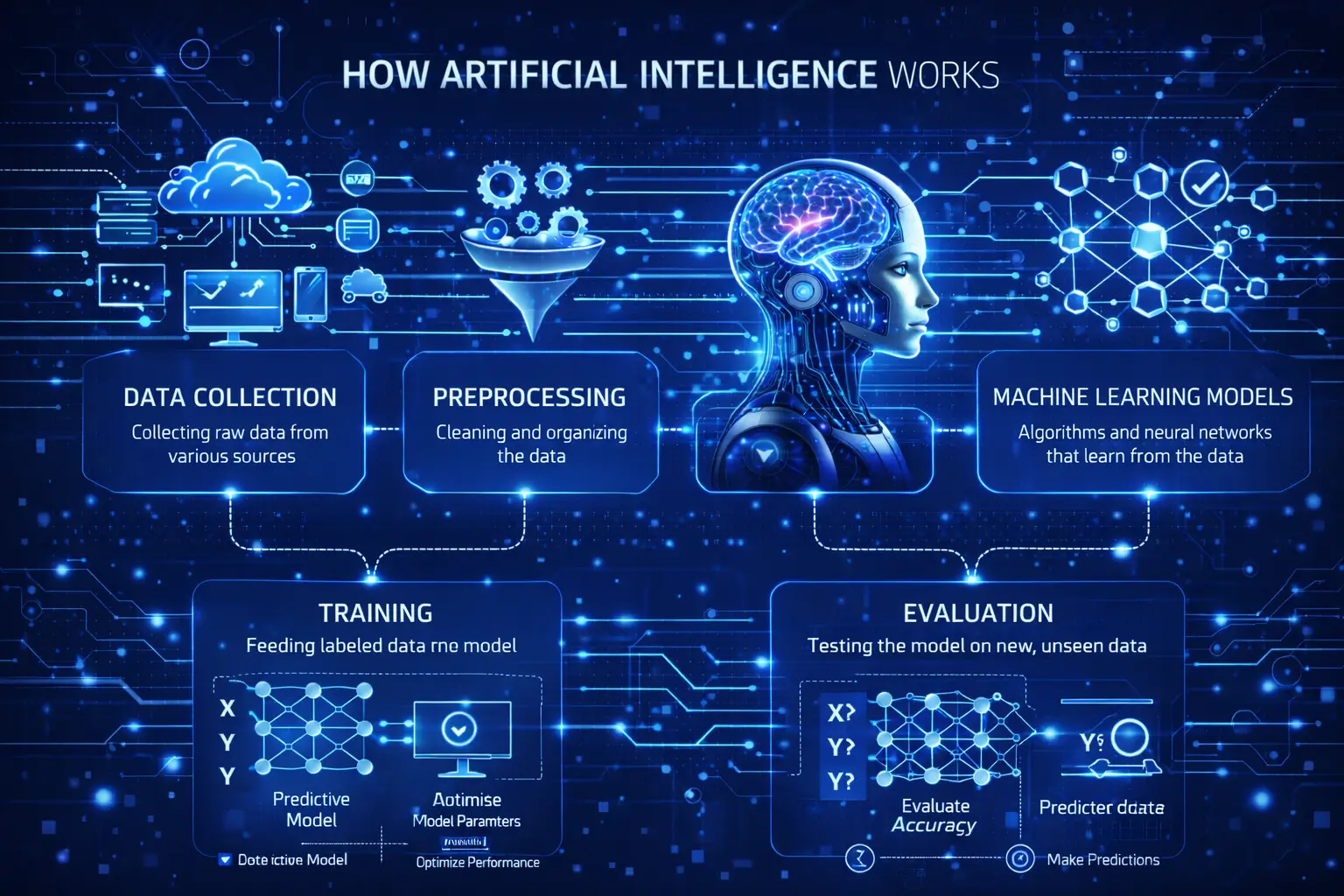
    HOW AI WORKS?

    AI works in a step-by-step process and then generates its result. 

    1. DATA COLLECTION:

    The process begins with data collection. The success of an artificial intelligence technology is determined by its first data. Engineers must carefully choose vast data sets to establish how the AI functions. Sometimes these data sets encompass many topics, such as ChatGPT. Sometimes the data is narrowly concentrated, such as healthcare information from hospitals in a small region.

    1. PREPROCESSES DATA:

    Before processing data, it first preprocesses the data through cleaning, evaluation, correction, and standardization. The data is explained or classified as well for better results. Reviewing and improving the data before using it in an AI model can lower the chances of the AI making mistakes and providing incorrect responses.

    1. TYPES OF MODELS:

    Once the data is ready, AI engineers need to choose an AI model to train. There are four main types of AI models.

    • Supervised learning models: These models depend on data that humans have labeled. Engineers must clearly define each data point so the AI can learn and make predictions.
    • Unsupervised learning models: These models use data that is not labeled. The AI can find patterns in the data, which helps it predict what happens next.
    • Reinforcement learning models: These models let the AI interact with its surroundings. The AI collects data about how well its actions perform, which helps improve future performance.
    • Deep learning models: These models use a neural network with multiple layers of neurons. As data moves through each layer, the AI makes calculations, finds relationships, and forms connections.
    1. TRAINING DATA:

    After choosing a model, training can start. Usually, we divide the data into two parts: one for training and one for testing. Developers input the training data into the model. As training continues, the model calculates and finds patterns that help it make future predictions. The time it takes to train a model depends on the type of model and the amount of data used.

    1. EVALUATING DATA:

    After processing the first training data, the AI model is ready to be tested. Engineers will assess metrics such as accuracy, which demonstrates correct predictions; precision, which evaluates the accuracy of positive forecasts; and recall, which reveals how effectively the model detects all relevant situations. By studying these data, engineers may better understand the model’s strengths and limitations and enhance its performance.

    1. ISSUES IN MODEL TESTING:

    Sometimes, the AI model’s testing results are not accurate. The developers may notice three main issues: 

    • If the given data is not accurate or poorly produced, it affects the results. 
    • There are patterns in data that help AI to work efficiently, but when these are too simple, the results can be manipulated.
    • Being biased is not good in any way, and for training data, one-sided data is also not beneficial for AI. 

    If developers find any of these shortcomings, they must improve the model. This may be performed by modifying the neural layers and nodes in a deep learning model, updating the AI algorithms, and standardizing the data.

    1. APPLICATION:

    When the developers confirmed the model’s performance, they approved it for the use of common people. For using the models, developers either add them to their current tools or develop applications that utilize the models.

    1. AI LEARNING CONTINUES:

    AI models require constant training; they are not trained once and then forgotten. Engineers work constantly to upgrade these AI models with new data. There are several methods for doing this training. One approach is to enhance the original AI model by incorporating additional data. Another approach is to get input from individuals based on the model’s replies. The AI training team uses this feedback to improve the model.

    AI has a vast circle of technologies, which help it work more proficiently. A few are these:

    • Computer vision uses pattern identification along with advanced learning to analyze photos and movies, enabling robots to figure out their environment instantly.
    • Natural Language Processing (NLP): Allows systems to evaluate and produce human language, making natural communication easier for task completion.
    • Graphics Processing Units (GPUs): Give the analytical ability required to train neural networks on huge datasets.
    • The Internet of Things (IoT) creates huge amounts of data that remain unanalyzed, which AI may help to manage and efficiently use.
    • Advanced Algorithms: Combine to analyze data faster, identifying rare events and optimizing complex scenarios.
    • APIs: Allow integration of AI capabilities into existing software, enhancing features like image recognition and data insights.

    AI aims to create software that simulates human-like reasoning and provides decision support, but it is not a replacement for humans.

  • Artificial Intelligence Explained

    Artificial Intelligence Explained

    Artificial intelligence (AI) is one of the most significant technological advances in the modern world. This intelligence system allows computers and other electronic devices to do jobs more effectively, which benefits humanity.

    Computers were originally developed primarily to conduct mathematical computations. However, significant developments have occurred over time to improve their effectiveness. As we all know, large-scale advancements continue to boost the capacity of our digital devices. Despite these gains, computers struggle to match human intelligence, particularly in activities requiring vast everyday knowledge across several disciplines. 

    Nonetheless, technological advancements have had a huge influence on the world. AI is presently used in a variety of applications throughout the world, including medical diagnosis and procedures, chatbots, search engines, voice and handwriting recognition, and document and video creation.

    ARTIFICIAL INTELLIGENCE AND ITS USE:

    AI can aid humans with learning, problem-solving, thinking, perception, and language comprehension. With time, new advancements in every industry have increased the relevance and use of AI. It aids in identifying the hazards that any project may create and recommends safeguards along with the outcomes. AI is useful in both educational and professional contexts. 

    AI transforms perception by using improved sensors to gather data from the surroundings. It then processes and interprets this data, allowing robots to “understand” the environment in ways similar to human sensory experience. This extraordinary capability enables AI to detect things, navigate complicated environments, and make strategic decisions based on real-time sensory information. 

    TYPES OF ARTIFICIAL INTELLIGENCE:

    AI has a wide variety, but for clarity, there are three: narrow or weak AI, general or strong AI, and super-intelligent AI. 

    • Narrow AI is used to do simple or routine activities such as facial identification, internet surfing, and driving a car. Narrow AI can also play complicated games like chess and perform other tasks that fall within this category. They function within a predetermined range or set of situations.
    • General or strong AI: This type of AI has human-like thinking abilities. It can handle new and unfamiliar tasks on its own. This strong AI can understand, learn, and use its intelligence to solve problems without needing help from humans.
    • Super-intelligent AI: This sort of artificial intelligence is connected with superhuman abilities. This type of intelligence has the potential to boost creativity and technological advancement in domains where humans fail. While interesting, the concept of superintelligence remains mostly speculative and has yet to be realized in today’s modern setting.

    ARTIFICIAL INTELLIGENCE BENEFITS

    • AI drastically reduces the time required to complete a wide range of tasks, allowing individuals and organizations to work more effectively. By automating routine tasks, AI enables successful multitasking while lowering the need for vast human resources and improving current ones.
    • AI makes it easier to carry out difficult tasks that used to take a lot of time and knowledge, all while keeping operating expenses low. This creates chances for creativity and innovation since corporations may transfer their resources to more strategic projects.
    • AI systems are meant to work around the clock without interruption, delivering optimal productivity and durability. This continual availability provides companies with the ability to adapt to demands and difficulties in real-time, giving them a competitive advantage in fast-paced contexts.
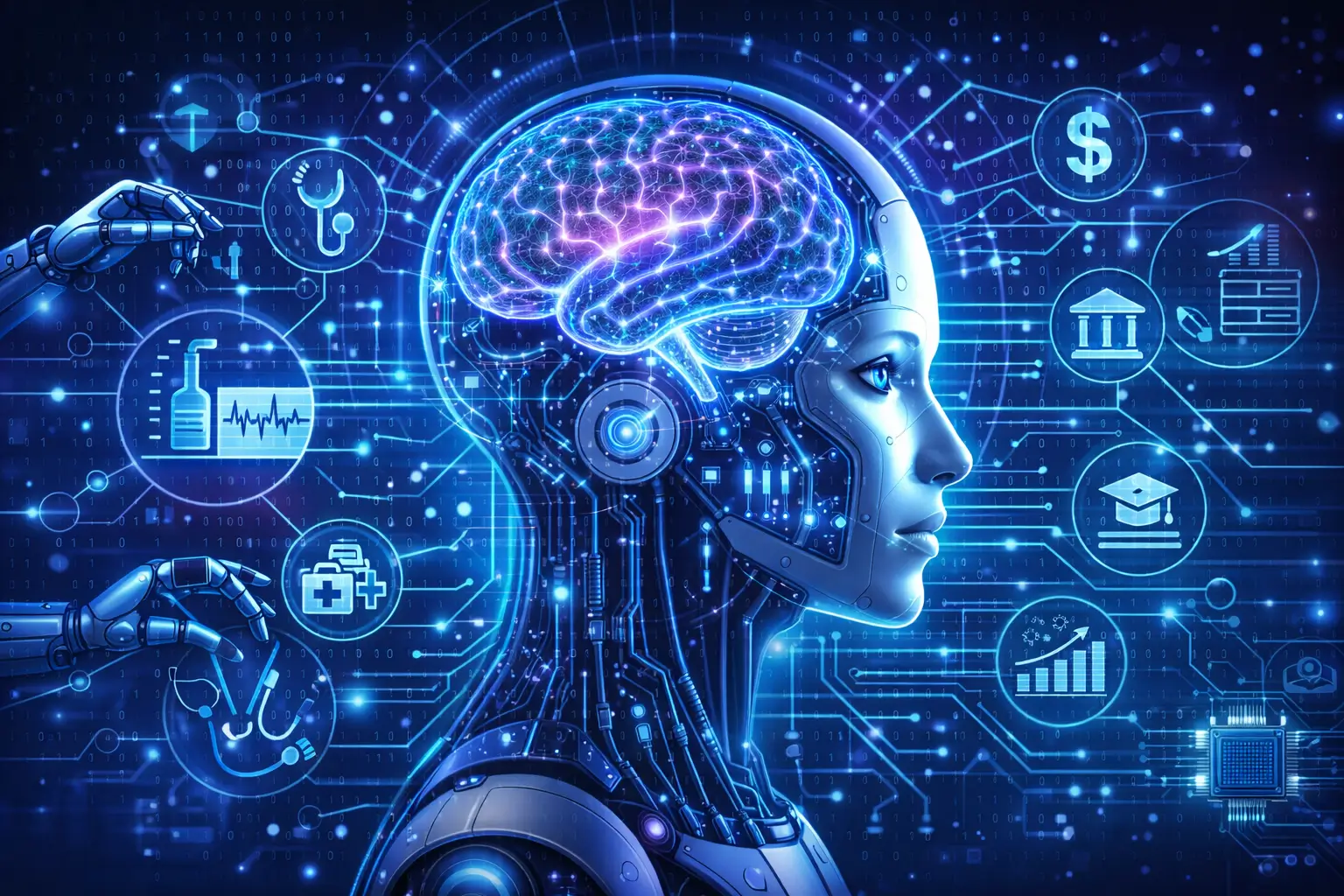
    • Artificial intelligence has enormous commercial potential, with applications in a wide range of industries, including healthcare, finance, manufacturing, and education. Its adaptability enables organizations to use AI for a variety of goals, including automating regular jobs, improving customer relations, and increasing operational efficiencies.
    • AI dramatically improves decision-making processes by offering enhanced analytical tools that not only speed up data processing but also provide deeper insights. This skill helps firms to make more informed decisions faster and with higher precision, resulting in better results and strategic benefits in a competitive environment.

    ARTIFICIAL INTELLIGENCE DRAWBACKS:

    • AI companies do not share the potential danger of their AI tools and how they can impact the common man. That makes it a lot harder for lawmakers to regulate the law efficiently for AI development efficiently. 
    • AI is a huge risk for people related to marketing, manufacturing, healthcare, and even teaching fields due to its adoption by companies and organizations for efficient working. 
    • Most people may not be aware of the potential dangers associated with AI self-awareness. As AI technology continues to advance, particularly with chatbots and virtual assistants, there’s a growing concern about their ability to communicate with humans in ways that can manipulate thoughts and behaviors. 
    • Online media and news have become more confusing due to AI-generated images, videos, voice changers, and fakes. These technologies allow people to create realistic photos, videos, and audio clips or to swap one person’s image with another in a picture or video. 

    ARTIFICIAL INTELLIGENCE AND ITS FUTURE

    Artificial intelligence (AI) has a promising future, but it also confronts significant challenges. AI is expected to become more prevalent as technology advances, revolutionizing industries such as healthcare, finance, and transportation. The labor market will shift as a result of AI-driven automation, forcing the creation of new jobs and skills.

    AI is readily extensible, versatile, and applicable to a variety of business processes. When we recall that AI is only a computer program, we may be able to better appreciate its potential applications. AI is being used extensively due to its capacity to bring intelligence to previously unintelligent occupations.

    As these technologies get better, the risk of misuse increases. People need to learn how to find reliable information. We need to be aware of the impact of AI in shaping how we see things. With images and sounds that can easily be changed, everyone, including tech companies and policymakers, must work together to promote trustworthy news sources.