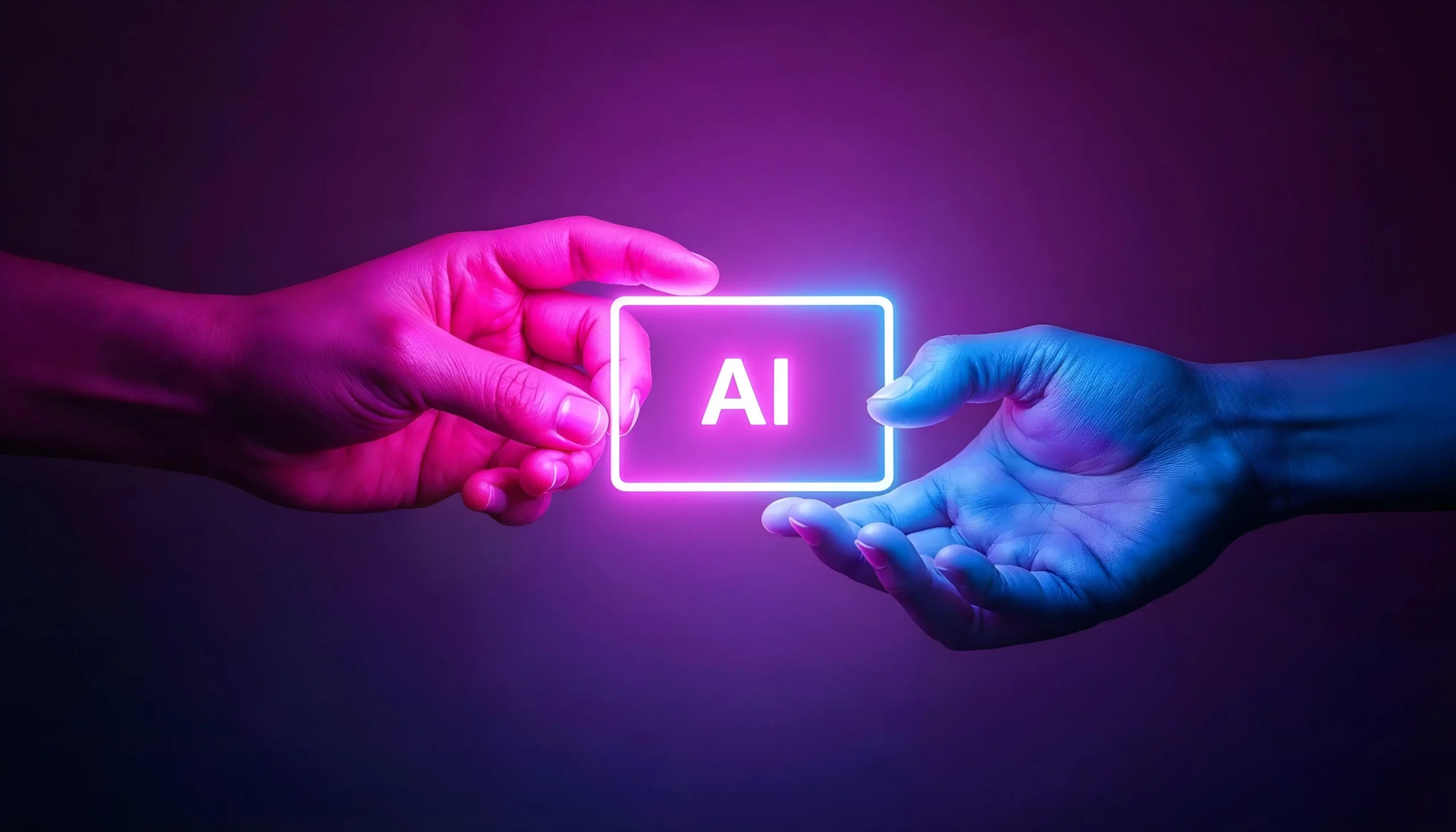
AI marketing uses artificial intelligence tools to make automated judgments based on data collecting, analysis, and further observations of audience or economic patterns that may influence marketing efforts. AI is frequently employed in digital marketing initiatives where speed is critical. AI marketing technologies employ data and customer profiles to learn how to engage with clients effectively and then give them targeted messages at the perfect moment without marketing team intervention, resulting in maximum efficiency. Many of today’s digital marketers employ generative AI to supplement marketing teams or execute more tactical activities that require less human delicacy.
HOW AI CAN HELP MARKETERS:
These are a few examples of how marketers can use AI.
- Personalized recommendations are one of the best ways that help companies connect with customers. Through AI, companies track down customers’ personal favorites or interests and deliver them accordingly.
- AI marketing is about giving clients exactly what they want when they want it. Predictive analytics makes this possible. These prediction models process massive amounts of data on each lead. Identify patterns. Then, identify the optimal moment to target each individual.
- Enter chatbots and AI marvels that provide quick responses, engage users, and even provide personalized recommendations. It’s like having a virtual assistant who is always there and never takes a break.
- Forget the hit-or-miss method. AI content optimization has altered the scenario. AI optimizes your content for laser-focused targeting. It examines user behavior, preferences, and trends to adapt your content strategy, ensuring that each piece speaks directly to your target audience’s hearts (and wallets).
There are certain ways of applying and using new technology, developers or marketers use few guidelines. These guidelines help companies and customers achieve their goals, keep their privacy, and maintain a healthy relationship with each other.
GENERAL AI MARKETING GUIDELINES:
PURPOSE OF USING AI IN MARKETING:
The most common question regarding AI is, “What can I use it for?”
- Customer Segmentation and Targeting: Personalization
- Chatbots & Virtual Assistants
- Predictive Analytics, Marketing Research, and Content Creation (e.g., brainstorming, outlining, writing, research)
- SEO Design Email Marketing Automation
- Social Media Management
- Ad Targeting and Optimization
- Customer Relationship Management (CRM).
- A/B Testing and Optimization.
- Fraud Detection and Security, etc.
Although AI can perform many things, it is critical to discuss its genuine purpose within your firm. This vision may vary as new technologies become available, but in general, you should explicitly define how and for what purpose you are using AI.
DETERMINE EACH USE:
Determine what recommended practices users should follow for each use case. You should also explicitly specify what the AI can and cannot accomplish in the context in which you use it. (This establishes realistic expectations for users while preventing misuse or overreliance on AI.)
For example, you may provide specific recommendations or AI prompts to help with each use case, such as content brainstorming and optimization, model training, and data analytics.
ETHICAL CONCERNS:
Depending on the usage, sector, or audience, AI can raise valid ethical considerations that you may not have considered.
For example, if you use AI to synthesize a client’s brief, is their confidential information at risk? How can you ensure that AI-generated content is not plagiarized? Identify any potential issues for each use case. Some things to consider.
- Transparency: Do you have to disclose that you are utilizing AI for specific purposes? How will your audience react? Are there any possible issues?
- Fairness: How can you reduce bias in AI systems? How can you check for bias?
- Privacy: How will you ensure AI systems follow applicable privacy laws and regulations? You may need to adopt privacy-enhancing technologies to protect.
- Accountability: Make sure that why and how the company is using AI, the company should have a fixed set of rules and regulations.
SET A USEFUL EXAMPLE:
When developing guidelines, it is critical to include real-world examples that graphically demonstrate how users can efficiently use the tools at their disposal. This approach not only clarifies usage but also encourages people by demonstrating the practical application of these tools in their daily lives.
FEEDBACK:
Even if your team has been at the forefront of AI since it came on the scene, you still need to sanity-check your guidelines to make sure they’re comprehensive and make sense to others. (If you have employees who are particularly nervous or intimidated by AI, the guidelines should not only help them understand but also feel empowered to use it effectively.)
Seek feedback from the appropriate parties, particularly on the moral ramifications or problems you might encounter.